TapeRelay 技术解析:1 MiB 分块与哈希校验TapeRelay: 1 MiB chunks and client-side hash checks
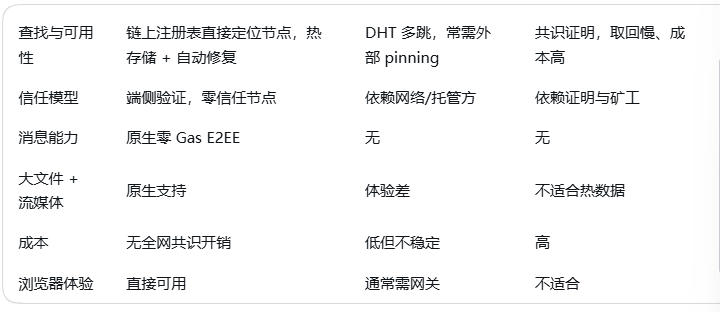
TapeOut 连续发文说明 TapeRelay 的文件传输机制:文件按 1 MiB 分块,用两级索引结构组织,从而支持断点续传;客户端依据内容哈希逐块核验,节点送来的数据即使被改动也会在核验时失败。官方指出,在内容寻址的点对点系统中,定位数据依赖 DHT 等分布式发现机制;区块链共识层的作用是维持共享状态,不应承担高带宽文件传输,不同层应各司其职。社区成员亦撰文指出,节点名气不能替代对每块数据的哈希校验。TapeOut published a series of posts explaining how TapeRelay handles files: content is split into 1 MiB chunks organized by a two-level index, which enables resumable transfers, and clients verify each chunk against the expected content hash, so modified data from a node fails the check even if the file name looks right. In a content-addressed peer-to-peer system, locating data relies on distributed discovery mechanisms such as DHT, the team said. Blockchain consensus is meant to maintain shared state, not to move high-bandwidth files, so different layers should handle the tasks they suit. Community writers added that a node's reputation cannot replace hash verification of every chunk.
来源 · 8 条Sources · 8
- @93bitmap
今天再说说taperelay的深度技术价值,其实很多人简单理解为大数据存储,让deweb使用更广泛,这个仅仅是一个优点而已。真正核弹级别是破圈!强刚需的破圈。如果只是对deweb利好,是不可能昨天大势暴跌,BEM大涨的。破圈就是告诉你,明天可能要横扫WEB2和WEB3,你是不是不用睡觉了? 技术深度价值 1、端侧验证把信任降到零,核心:信任0成本 文件按 1 MiB 切块,每块用内容哈希命名,两层索引后单文件理论上可达约 1 PiB。客户端逐块核对哈希,节点无法修改、无法冒充。消息带密码学签名(非链上签名),同样不花 Gas。这是与 IPFS 最本质的区别:IPFS 的“找到内容”依赖网络,T
- @TapeOutWorld
Why does uploading a video require every node in the blockchain network to participate in processing it? Blockchain consensus mechanisms are designed to maintain shared state, not to serve as high bandwidth file transfer systems When large files and high frequency messages are processed through on
- @TapeOutWorld
A decentralized Web does not need every byte to be processed by every blockchain node What it needs is an architecture where different layers handle the tasks they are best suited for
- @0xWilliamETH
TapeRelay:让区块链不再被视频和消息“拖垮” 为什么上传一个视频,却要让整条区块链网络的每一个节点都参与处理? 这个问题听起来有点离谱,却精准点出了当前多数区块链应用在处理真实互联网内容时的核心矛盾。正如 @TapeOutWorld 在帖子中所指出的: “Blockchain consensus mechanisms are designed to maintain shared state, not to serve as high bandwidth file transfer systems. When large files and high frequency mess
- @TapeOutWorld
Decentralized storage is not only about where files are stored It is also about how applications find the nodes responsible for delivering those files In content addressed peer to peer systems, locating data may involve distributed discovery mechanisms such as DHT TapeRelay addresses this problem
- @TapeOutWorld
Decentralized infrastructure does not automatically guarantee data integrity When files pass through multiple independent relay nodes, clients need a way to verify that the received content has not been modified TapeRelay divides files into 1 MiB chunks and uses SHA-256 hashes for client side inte
- @lesslyrain7d
不认识节点老板,也敢把文件交给它吗? 假如有个小团队来找你:我们也能存视频,价格合适,离你的用户还近。 你会不会用? 便宜当然有吸引力。可真把应用里的文件交出去,还会担心它有没有好好存,返回的内容会不会被换,哪天不做了又该怎么办。一个刚起步的服务商,往往先得回答这些问题。 @93bitmap 这篇聊 TapeRelay,有句话很值得展开:“运营方竞争的是服务质量与地理位置。” 先拿一段视频来说。TapeRelay 把文件切成块,客户端依据预期的内容哈希逐块核对。某台节点送来一块被改过的数据,即使文件名一样、看起来也像视频,核验也过不了。 节点有没有名气,不能替一块错误的数据通过检查
- @TapeOutWorld
Can your application efficiently access specific parts of a file without downloading the entire content? Supporting large files is not just about increasing storage limits TapeRelay divides files into 1 MiB chunks and organizes them through a two level indexing structure This enables resumable up