信贷评分电路构想:每笔审批出可重放回执Credit scoring circuit concept: replayable receipts for every approval
11/17 社区成员继续完善「credit where due」信贷评分构想:贷款方把核心评分公式发布为 X Layer 上的 TapeOut 电路,每笔审批生成包含输入、电路 ID、评分与截止线的回执,任何人可重放核对下一次谁会被批准,更新在链上做版本化。实现上,加权求和与阈值判断以定点数放进小电路,隐私数据留在链下;方案建议先上线核心评分,再逐步加入限额模块。On 11/17 a community member expanded the "credit where due" scoring concept: a lender publishes its core scoring formula as a TapeOut circuit on X Layer, and each decision issues a receipt containing inputs, circuit ID, score and cutoff that anyone can replay to see what would be approved next, with updates versioned onchain. The weighted sum and cutoff fit as fixed-point math in a small circuit while private data stays offchain; the plan starts with the core score and adds limit modules later.
来源 · 4 条Sources · 4
- @Web3AJ_
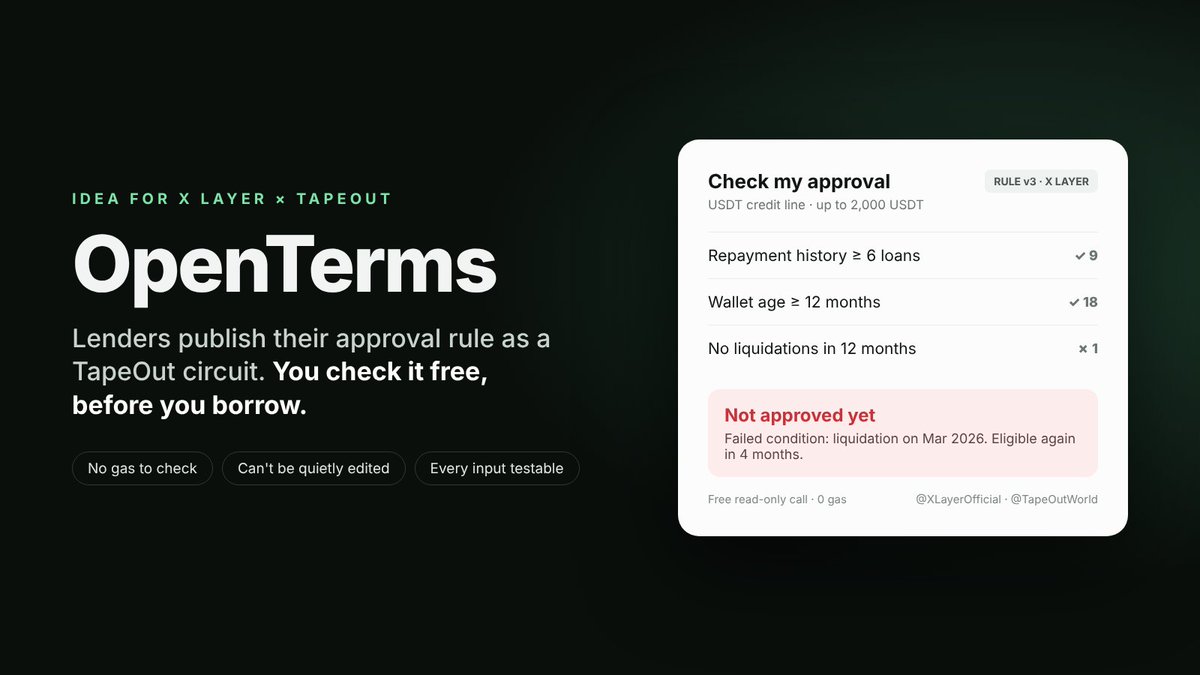
I wish X Layer TapeOut had OpenTerms: credit rules you can check before you borrow. Borrowing onchain today, like Aave on X Layer, works one way: lock more than you borrow. No credit, no trust. Real credit (BNPL, fintech lenders, credit lines) runs on approval rules you never see. You get “not eli
- @Web3AJ_
中文简介: OpenTerms —— 借款前就能核对的信贷规则。 现在链上借贷(如 X Layer 上的 Aave)只能超额抵押,没有真正的信用;链下信贷(先买后付、金融科技放贷)则用你看不到的审批规则,只告诉你"不符合条件"。 OpenTerms:放贷方把审批规则做成 X Layer 上的 TapeOut 电路。 ① 借款人输入自己的数据,免费只读调用,立刻知道能否通过、哪一条没通过 ② 规则很小,任何人都能穷举所有输入,查出隐藏的不公平门槛 ③ 规则无法被悄悄修改,每次变更都是一个新的、带日期的电路版本 第一版:一个规则电路 + "查我的审批"页面 + X Layer 上的 USDT
- @thecitymoneyapp
@XLayerOfficial @TapeOutWorld 3/ how credit where due works: a lender publishes its core scoring formula as a tapeout circuit on x layer. every decision gets a receipt (inputs, circuit id, score, cutoff). anyone can replay it to see what gets approved next time, with updates versioned onchain.
- @thecitymoneyapp
@XLayerOfficial @TapeOutWorld 5/ why tapeout: a core scorecard (weighted sum + cutoff) fits as fixed-point math in a small circuit, keeping private data offchain. start simple with the core score and add limit modules later. public netlist + replay is the key, so all sides check the same logic.